
Why Traditional Takeoffs Are Costing Suppliers Time and Money (and What to Do About It)
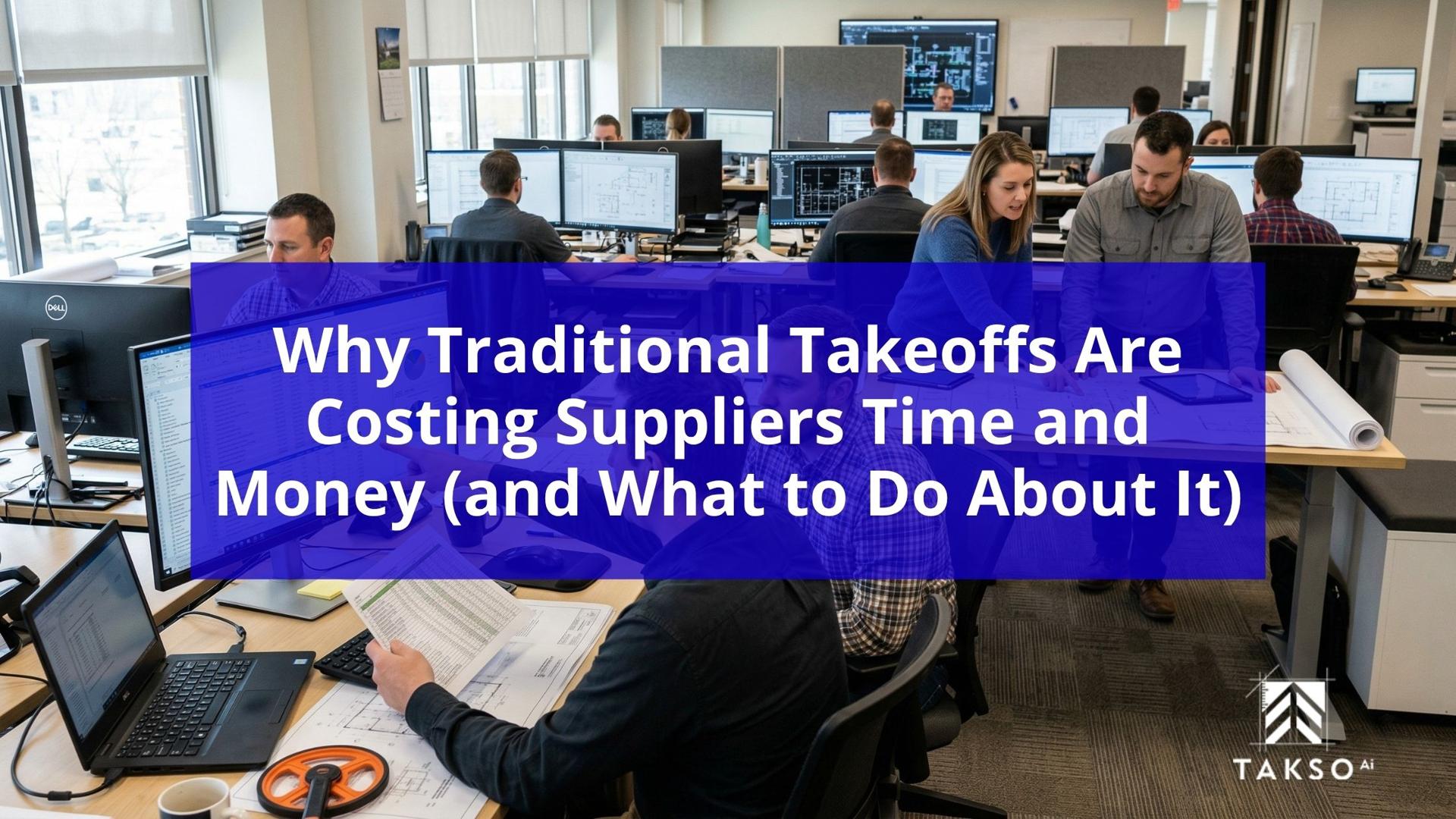
There is a clear shift happening across construction, and suppliers are feeling it first. Estimating is no longer contained within one team. As companies push to operate leaner and move faster, more responsibility is being pushed downstream. General contractors rely on subcontractors. Subcontractors rely on suppliers. What used to sit upstream is now landing with you.
That shift creates opportunity, but only if suppliers can respond effectively and consistently under pressure. Contractors are no longer just asking for pricing. They are asking for speed, accuracy, and support during the bidding process. Traditional takeoffs make that difficult. Manual workflows consume time, limit capacity, and quietly reduce margins. Suppliers who continue relying on them risk falling behind in a market that rewards responsiveness.
Work Is Being Pushed Downstream
The pressure to reduce costs and increase efficiency has reshaped how work is distributed across the entire construction pipeline. Contractors are managing tighter timelines with fewer resources, which means estimating is no longer handled in one place. It is shared across teams, and increasingly, across the supply chain.
Suppliers are now being brought into projects earlier, often before bids are finalized or even fully scoped. This changes expectations significantly. You are not just quoting materials. You are contributing to how a contractor builds their estimate, evaluates scope, and prepares to compete more effectively. Government frameworks also emphasize that estimate accuracy evolves with project detail, reinforcing the need for reliable data early in the process.
Why Contractors Are Asking for Takeoff Support
Many contractors do not have the time or internal resources to complete detailed takeoffs for every project they pursue. Smaller teams especially are managing multiple bids at once, and estimating quickly becomes a bottleneck that slows everything down.
Suppliers are in a position to help fill that gap. You understand materials, pricing, and specifications, and you benefit when the contractor wins the job. That alignment makes takeoff support a natural extension of your role and value.
Contractors are now choosing partners based on more than cost. They are asking:
- Who can help me estimate faster
- Who can improve accuracy
- Who can help me bid more jobs
This growing demand is also driving adoption of AI takeoff software for modern estimators, which helps suppliers deliver faster, more accurate takeoffs without adding pressure to internal teams.
Suppliers who meet these needs become significantly more valuable and far more likely to be included in future project opportunities.
The Competitive Advantage of Supporting Takeoffs
When you support takeoffs, you move upstream in the decision-making process and become part of the contractor’s workflow. You are no longer reacting to requests. You are helping shape the bid itself before it is submitted.
This creates a clear advantage. Contractors are more likely to work with suppliers who help them move quickly and confidently, even if pricing is slightly higher. The value comes from reliability, speed, and support, not just cost.
Over time, this leads to stronger relationships, repeat business, and a more consistent pipeline of opportunities. Suppliers who offer takeoff support are not just competing. They are becoming essential partners in the process.
Price Is No Longer Enough
Price still matters, but it is no longer the deciding factor in most contractor decisions. Contractors understand that a small savings on materials means little if the estimate is slow, incomplete, or inaccurate.
An incomplete or rushed takeoff can lead to missed scope, cost overruns, or lost bids altogether. These risks outweigh minor pricing differences in most cases. As outlined in federal cost estimating guidance, inaccurate or incomplete estimates introduce significant financial risk and can directly impact project outcomes.
Takeoff support has become part of the value equation, especially in competitive bidding environments where precision and speed directly influence outcomes.
The Problem with Traditional Takeoffs
The challenge is not whether to offer takeoffs. It is how they are done and how efficiently they can be delivered under pressure.
Traditional takeoffs rely on manual processes that take time and introduce risk into the workflow. Counting items, measuring plans, and extracting quantities line by line creates a process that is difficult to scale. Even with basic construction estimating software, much of the effort remains manual.
This creates several issues:
- Limited capacity to support multiple bids at once
- Increased pressure on internal teams during peak periods
- Higher risk of errors under tight deadlines
- Less time for higher-value estimating work
These limitations make manual takeoffs construction workflows increasingly unsustainable in a fast-moving and competitive environment.
The Hidden Cost Suppliers Feel
The true cost of traditional takeoffs is often overlooked because it builds gradually over time. It shows up in lost time, missed opportunities, and reduced efficiency across the business.
Time is a major cost driver. The longer a takeoff takes, the fewer projects a supplier can support each week. Capacity becomes constrained, and teams are forced to choose which opportunities to pursue.
Errors add another layer of risk. Even small mistakes can impact margins or require rework. Over time, these inefficiencies compound and affect overall performance. Research from the National Institute of Standards and Technology has shown that inefficiencies in construction data and processes cost the industry billions annually.
This is why many suppliers are moving toward modern takeoff software that reduces manual effort, improves accuracy, and increases consistency across projects.
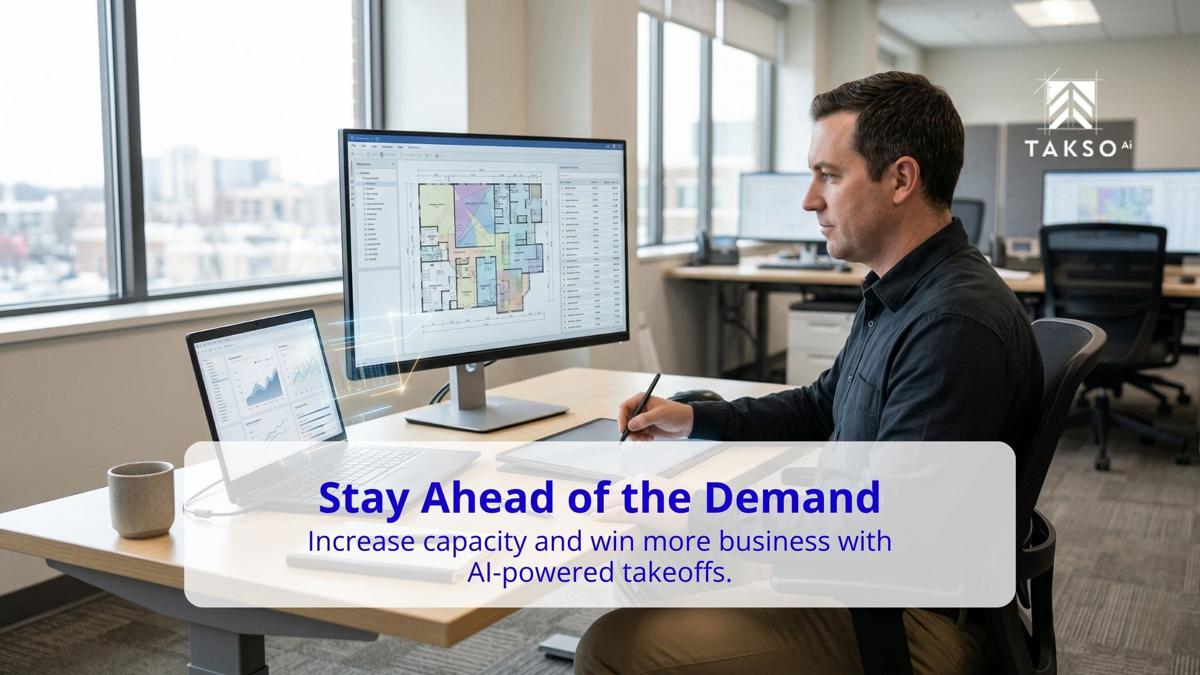
Quantity Takeoffs Still Matter, but the Process Has Changed
The purpose of a quantity takeoff remains the same. It is about identifying the materials required for a project and supporting accurate pricing decisions. What has changed is how quickly and consistently that work needs to be done.
Takeoffs now play a central role in construction estimating. They influence bidding speed, contractor confidence, and overall project success. Manual processes struggle to keep up with these expectations in high-demand environments. Industry standards reinforce this shift. According to the U.S. National BIM Standard, quantity takeoffs are foundational to reliable cost estimating and data-driven project decisions.
With AI takeoff software, repetitive tasks can be completed faster, allowing estimators to focus on reviewing scope, validating details, and making informed decisions. The result is stronger performance without sacrificing expertise.
Better Tools Mean Better Performance
The tools used for takeoffs directly affect outcomes across estimating workflows. Manual workflows create variability and limit efficiency from project to project. Modern tools reduce that variability and improve consistency in results.
For suppliers, this means faster turnaround times, fewer errors, and better control over margins. It also allows teams to handle more projects without increasing workload or creating internal strain.
This is especially relevant for teams already working with mechanical estimating software, where consistency and accuracy are critical across different project scopes and technical requirements.
From Vendor to Strategic Partner
The real opportunity is not just efficiency. It is repositioning within the construction ecosystem and supply chain. Suppliers who improve their takeoff process move from being order takers to strategic partners. They become part of how contractors win work, not just how they fulfill it after the fact.
This shift builds stronger relationships and increases long-term value. With estimating software for suppliers and distributors, teams can scale their support without adding headcount, making this transition both practical and sustainable in the long run.
What Suppliers Need to Do Next
To stay competitive, suppliers need a way to deliver takeoffs quickly, accurately, and at scale without overwhelming their teams. Manual processes cannot meet these demands consistently. Best practices also reinforce that structured, repeatable estimating processes are critical for improving accuracy, scalability, and decision-making.
Takso AI is designed to solve this problem. It automates time-intensive takeoff tasks, reduces human error, and allows teams to support more contractors without increasing workload. Instead of focusing on repetitive counting, estimators can focus on scope, pricing, and strategy.
If you are looking to improve speed, accuracy, and capacity, you can connect with the contact TaksoAi estimating software team to see how it fits into your workflow.
Key Takeaways
- Traditional manual takeoffs limit how many bids suppliers can support, creating bottlenecks that reduce efficiency and slow response times.
- Contractors increasingly expect suppliers to assist with estimating support, bid preparation, and accurate quantity takeoffs during the bidding process.
- Manual takeoff workflows increase the risk of errors, missed scope, and internal strain, especially when estimating teams are managing multiple projects simultaneously.
- Modern estimating tools like modern takeoff software help suppliers improve speed, consistency, and estimating capacity without significantly increasing workload.
- Suppliers using estimating software for suppliers and distributors can strengthen contractor relationships, support more bids, and position themselves as strategic partners rather than just material vendors.
FAQs About Traditional Takeoffs for Suppliers
Why are traditional takeoffs becoming a problem for suppliers?
Traditional takeoffs rely heavily on manual counting, measurement, and quantity extraction, which takes significant time and increases the risk of errors. As contractors demand faster bid support and more estimating assistance, suppliers using manual workflows often struggle to keep up with project volume, tight deadlines, and growing expectations.
How does takeoff support help suppliers win more business?
Providing takeoff support helps suppliers become more valuable to contractors during the bidding process. Faster and more accurate takeoffs improve estimating efficiency for contractors, strengthen working relationships, and increase the likelihood of suppliers being included in future bids and long-term project opportunities.
What are the benefits of modern takeoff software for suppliers?
Modern takeoff software helps suppliers reduce repetitive manual work, improve estimating consistency, and increase the number of projects they can support. Faster workflows also allow teams to spend more time reviewing scope, assisting contractors, and improving pricing accuracy across multiple bids.
Can AI takeoff tools improve estimating accuracy?
Yes. AI-powered takeoff tools help reduce errors caused by manual counting and repetitive quantity extraction. More consistent takeoff data allows suppliers and estimators to review project scope more confidently and improve the reliability of pricing, material forecasting, and bid preparation workflows.
Is estimating software only useful for large suppliers?
No. Smaller suppliers and distributors can benefit significantly from estimating software because it helps limited teams handle more bids without increasing workload. Improved efficiency and faster turnaround times allow smaller operations to compete more effectively while maintaining better consistency across projects.
How does TaksoAi support suppliers and distributors?
TaksoAi helps suppliers and distributors automate time-consuming takeoff tasks directly from construction drawings and PDFs. By reducing manual effort and improving consistency, TaksoAi allows teams to support more contractor bids, improve estimating workflows, and focus more attention on pricing, scope review, and customer relationships.
Where Suppliers Go From Here
Traditional takeoffs are limiting suppliers more than it seems at first glance. They reduce capacity, increase risk, and make it harder to compete in a fast-moving market.
At the same time, suppliers who adapt have a clear advantage. By improving how takeoffs are handled, they can support more contractors, win more business, and become trusted partners in the estimating process.
The shift is already happening across the industry. The only question is how quickly you respond and position yourself ahead of competitors.